
Artisanal
Open-pit kilns
- Price
- Low
- MRV
- Minimal
- Methane risk
- High
- Co-benefits
- Strong
Limited scale & monitoring
Small units can offer local benefits, but methane control and traceable monitoring can constrain a certifiable business model.
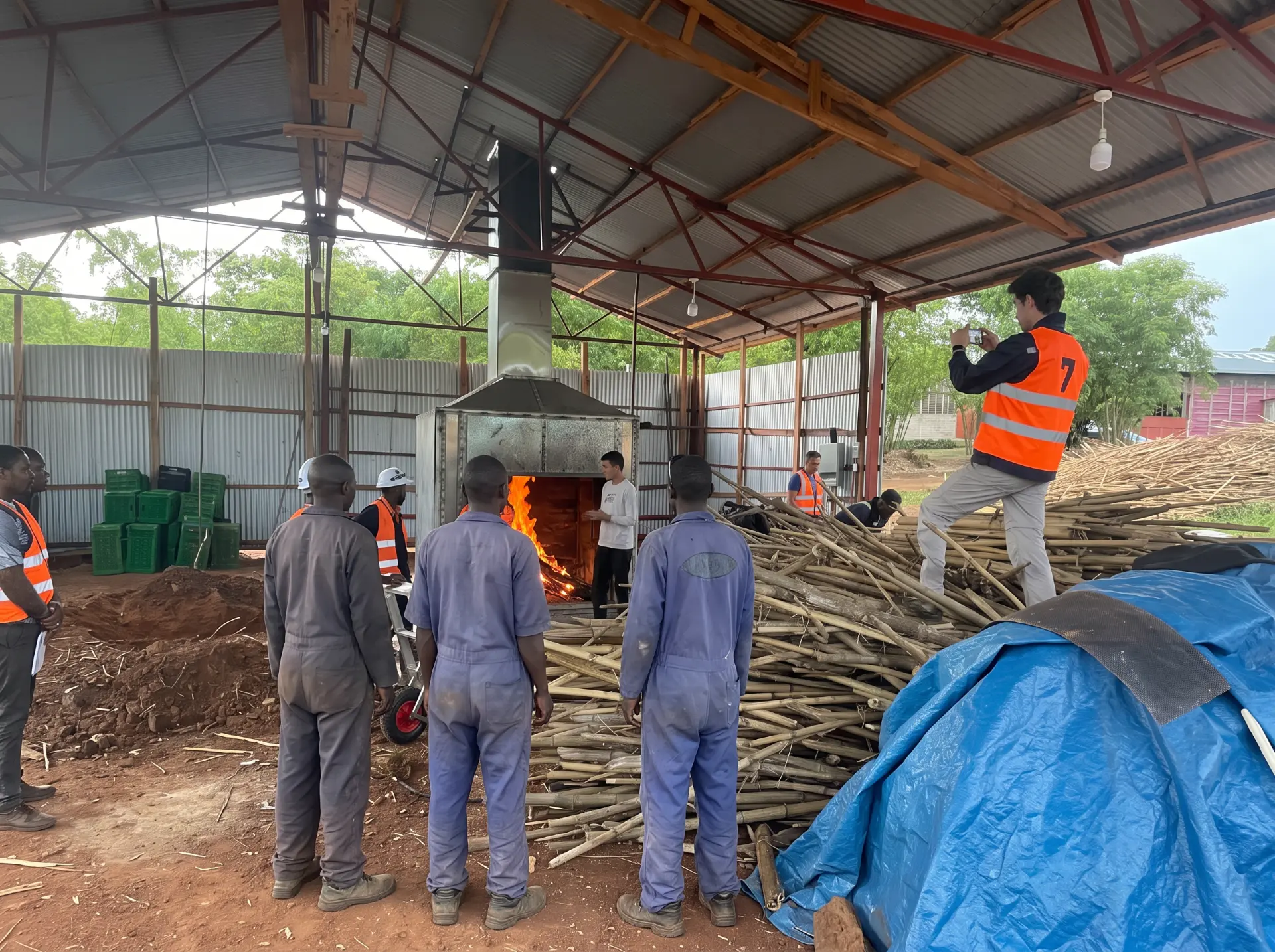
Investment case | European family offices
An operating biochar business with a long-term growth thesis: local feedstock, agricultural products and carbon removals. Founded by Global Woods in 2026 and today Uganda's largest biochar producer.
PrimeBiochar Materials Ltd. is the operating company and investment vehicle. Its carbon project is the Ugandan Biochar Alliance, currently undergoing its Verra carbon audit.
Back to the carbon project01 / 11 - The problem
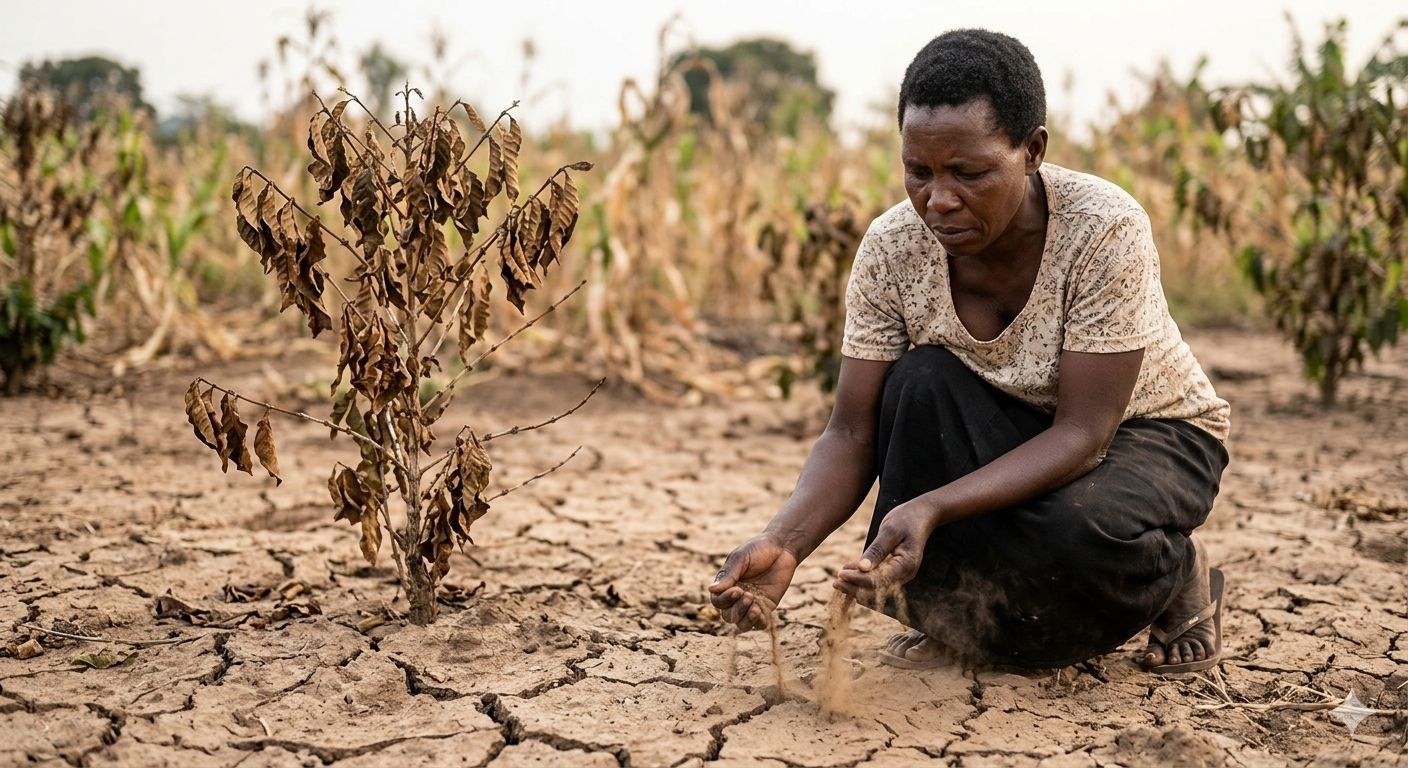
Uganda's farms face two pressures at once: soils that hold less water and fewer nutrients, and fertilizer prices that recent supply disruptions pushed up by more than 25%.
As the climate worsens, degraded soils lose their capacity to hold water and the nutrients crops need.
Uganda imports most of its fertilizer. Recent supply disruptions pushed import prices up by more than 25% in a very short time.
Failing soils and unaffordable inputs squeeze the smallholder farmers who supply coffee, tea and maize to global chains.
02 / 11 - The solution
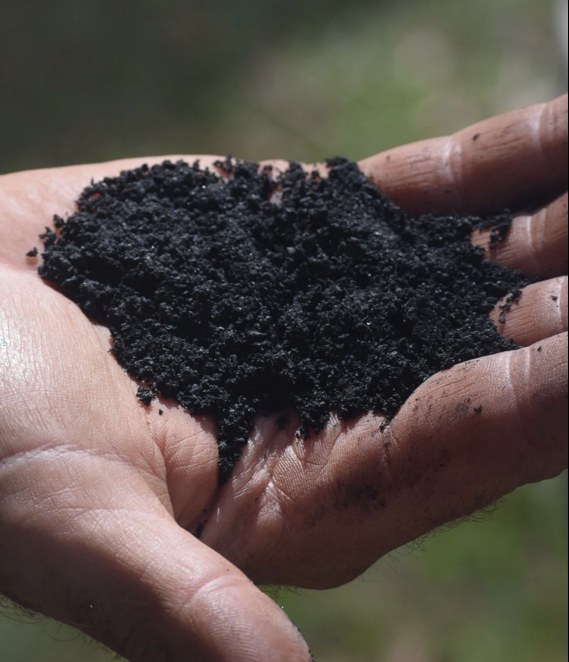
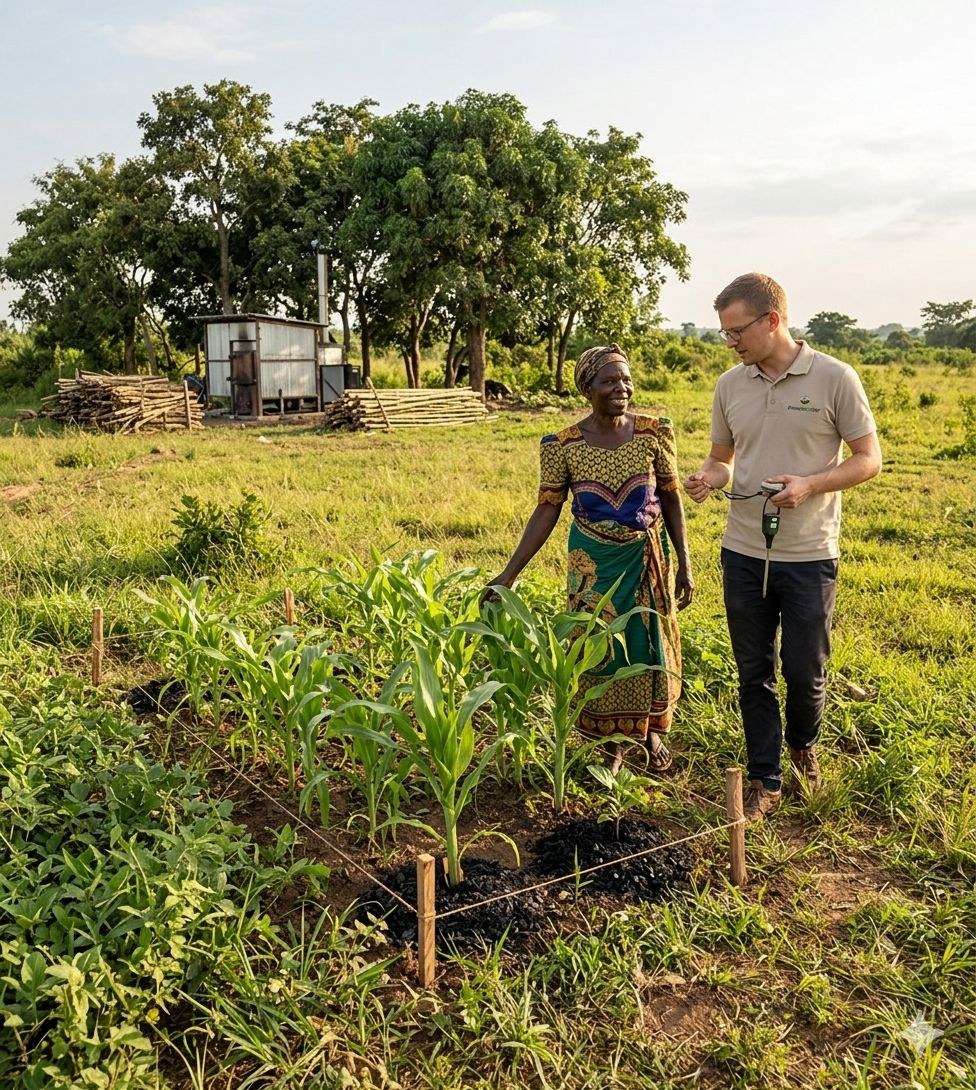
Biochar is the charcoal-like residue of pyrolysis: biomass heated without oxygen. Its porous structure holds water and nutrients in the root zone instead of letting them wash away.
 Hover & click to zoom
Granular biochar - light, black and stable for centuries in the soil.
Nutrient-loaded biochar holds inputs in the root zone, so less fertilizer is needed and fewer emissions are released.
Biochar can hold up to three times its own weight in water, which cushions crops against dry spells.
Healthier soil raises crop yields, which is what secures a smallholder's income.
Because the credit revenue sits on top of the product revenue, the price a farmer pays for the biochar-fertilizer can be cross-subsidised - which is what makes premium inputs reachable for smallholders.
03 / 11 - The evidence
The yield response is not our claim - it is the published record. Tap a crop to see the study behind the range, and follow the link to read it.
Yield ranges as cited in the PrimeBiochar pitch deck; each crop links to the published study behind it.
04 / 11 - Feedstock edge
High biomass costs are what kill most biochar companies. PrimeBiochar starts from a network rather than a search: Global Woods has worked in Uganda's forestry sector for 28 years.
Sourcing radius
Max. 20 km to the kiln
05 / 11 - The right scale
Artisanal kilns are too small to certify, industrial plants depend on rare parts and long biomass hauls. We work in the middle: closed, robust kilns placed close to where residues arise.
Open-pit kilns
Limited scale & monitoring
Small units can offer local benefits, but methane control and traceable monitoring can constrain a certifiable business model.
Closed medium-scale kilns
Africa-proof - our focus
Robust kilns fit local farm structures as a partnership model. Locating facilities close to residues keeps biomass logistics lean.
Centralised facilities
Higher capital & logistics needs
Specialist parts, engineering and large feedstock catchments can make centralised facilities harder to operate economically in this setting.
Qualitative comparison, not numerical scores.
Comparison based on the biochar technology spectrum published by Supercritical.
06 / 11 - Target markets
Soil products sell today; livestock, water and industrial applications are in development - each with its own buyers, alongside verified carbon removal credits.
 Selling today
Better soil structure, water retention and nutrient cycling.
 In development
Lower ammonia, drier bedding and better manure quality.
 In development
Local filter media for community and wastewater systems.
 In development
Media for acidic wastewater, fats and organic loads.
 In development
Adsorption of heavy metals, solvents, dyes and hydrocarbons.
Plus a second revenue stream: verified carbon removal credits from every tonne produced.
Explore PrimeBiochar applications07 / 11 - The market
Coffee, staple crops and horticulture offer routes to farmers who need healthier soils. The pitch deck estimates a $300M fertilizer opportunity; this is a company estimate, not an independently verified market valuation.
Crop households - pitch-deck estimates
Beans: 4.0 million households estimated in the pitch deck.
The household counts and $300M market value are company pitch-deck estimates. The sources below provide independent context, not verification of those figures. Crops overlap, so household counts must not be added together.
Official agricultural household and crop statistics.
Fertilizer trade context. It does not substantiate the deck's 300,000-tonne annual estimate.
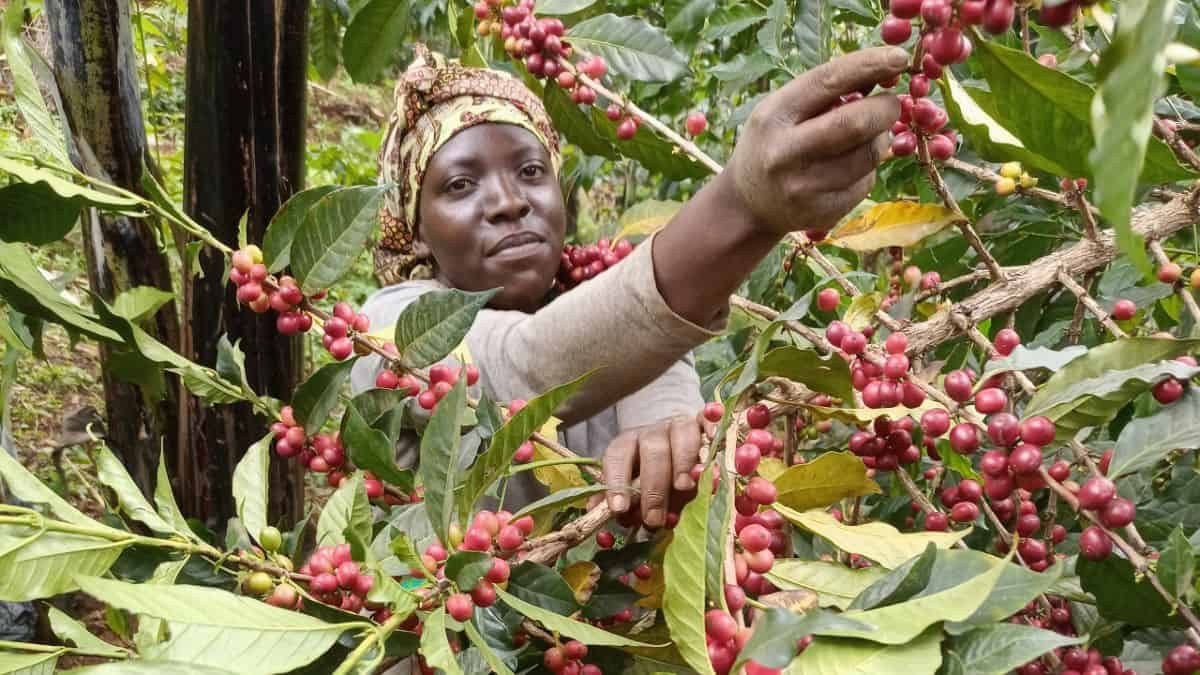
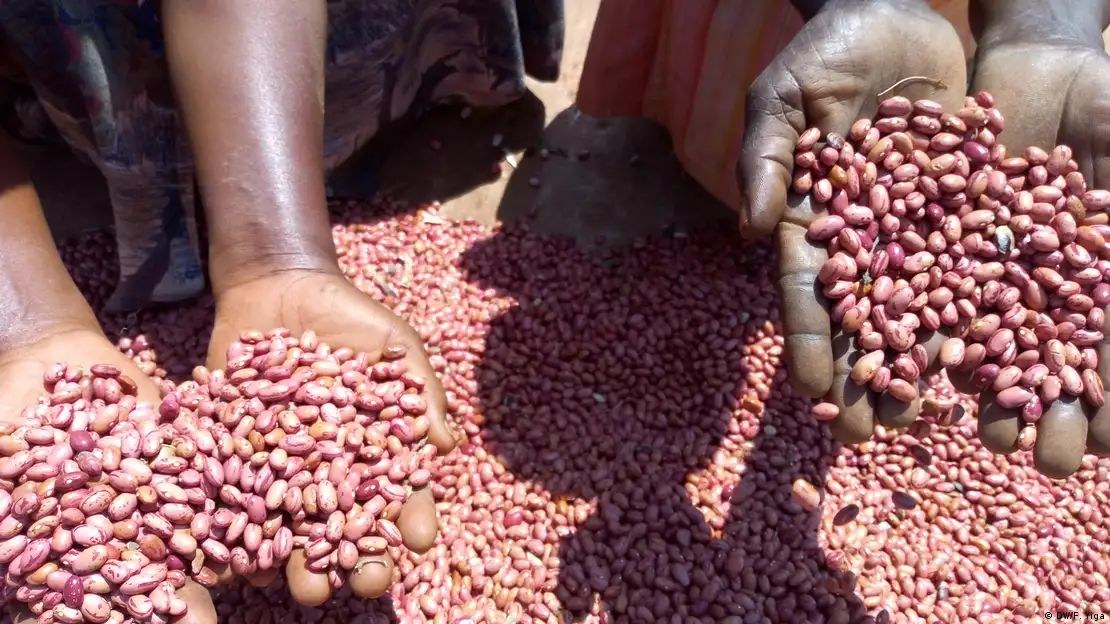
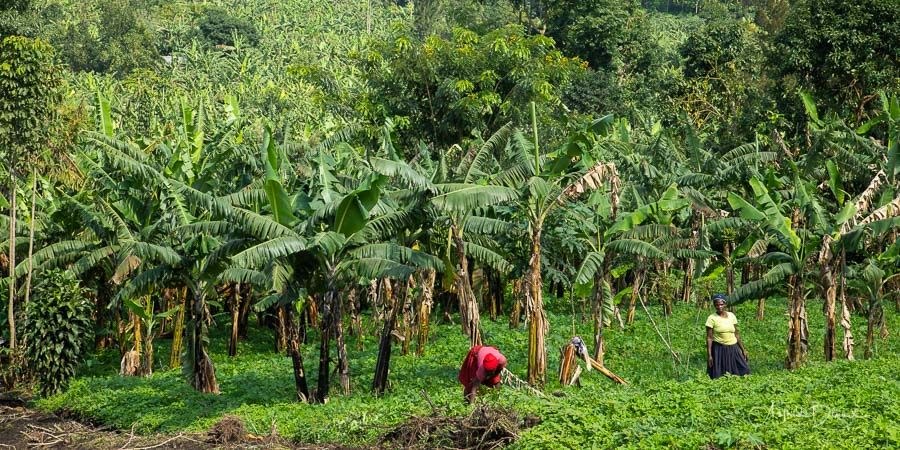
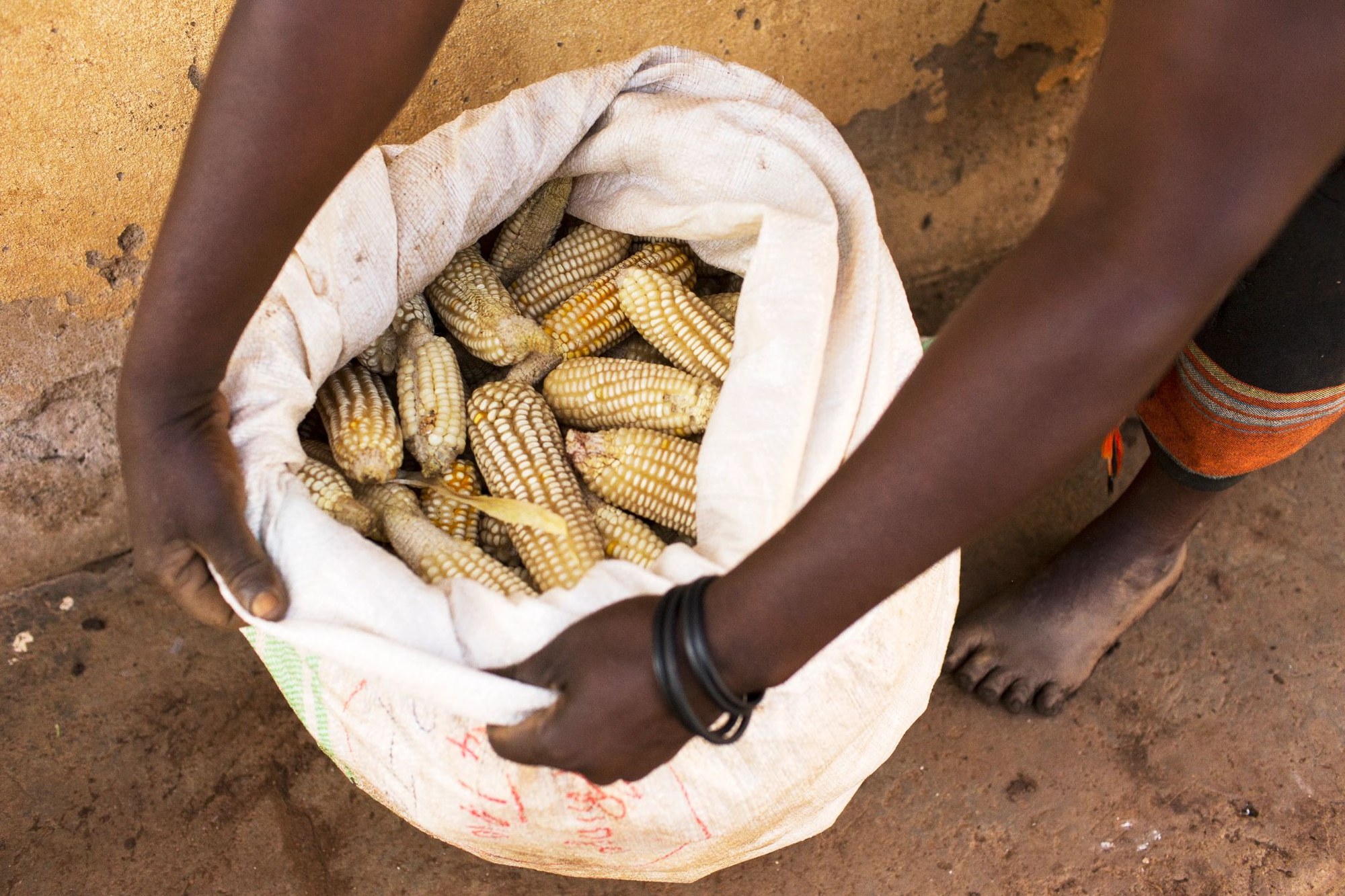
Coffee, beans, matooke and maize: the value chains smallholders sell into, and where a yield response shows up in household income.
08 / 11 - One facility
Move the slider to see what the model looks like at one site and at the ten-site target. Every figure is a planning target, not achieved output.
Biomass per year
3,200t
Biochar per year
400t
Removal credits per year
800credits
Each facility is planned around 3,200 t of locally sourced biomass per year. Figures are planning targets, not achieved output.
A target of 10 facilities over 5 years, each fed from its own catchment.
09 / 11 - The plan
The plan is funded from three places: equity Global Woods has already committed, non-dilutive grants, and the concessional debt or equity now being raised. Tap or hover a year to read the cumulative cashflow.
2026: -€1,500,000 cumulative cashflow.
Business plan projection prepared for the pitch deck. It is a plan, not a forecast of returns; carbon issuance, customer adoption and expansion remain execution risks.
Debt / equity finance (Concessional - sought): Based on a proven pilot and early revenues, to accelerate market entry.
Sought from investors
€500k - €1M
To scale production in Uganda and prepare expansion into other African countries with technology built for local conditions.
10 / 11 - Roadmap
The 2026 phases are complete or underway. Tap a phase to read what it covered.
Initial revenue from biochar sales generated and the carbon certification process started to co-finance the business model.
Next step
Finalise biomass supply and site planning for two additional production factories, and complete the carbon audit so the first credits can be issued.
First biochar sales are made. First carbon credits are targeted for Q1 2027, subject to verification.
11 / 11 - Management team
The people leading PrimeBiochar's operations, commercial strategy and carbon certification, supported by the Ugandan production, research and sales team.

Biochar project venture lead

Construction, dMRV, carbon market

Operations lead

Carbon sales & commercial strategy

Carbon certification
The wider team
14 people in total
Alongside management, our staff and on-site workers in Uganda handle biomass, run the facility and support research trials and sales.
PrimeBiochar Materials Ltd. is the operating company and investment vehicle. The funding expands production in Uganda, strengthens the farmer product offering and supports a decentralised business with potential to grow across Africa.
An early-stage operating business for investors considering long-term growth alongside agricultural and climate impact. Carbon issuance, customer adoption and expansion remain execution risks; returns are not guaranteed.
Arrange a confidential introductory call with Moriz to review the business plan, capital requirements and key risks, alongside a personal presentation of the pitch deck.
Moriz Vohrer
Strategy, Investments, Standards